
The Shoes
A Memorial Day Essay

This should have been posted earlier this week. Sorry about my delinquency. ken anderson, who claims not to be a writer, keeps writing great things! I love this one so much that it can’t wait.
Today was Memorial Day, so I found myself thinking about my dad and WWII.
Memorial Day in America always feels slightly confusing to me now. Mattress sales. Flag graphics everywhere. Pickup trucks covered in patriotic decals. Hot dogs and jet flyovers. Grief somehow reorganized into a long weekend.
My niece gave a report on WWII recently using some of the things my dad brought home from Europe. My brother kept them after dad died. A German officer’s rifle. A ceremonial bayonet. Apparently, the school was fine with the bayonet but not the rifle, even though the rifle no longer works.
I would have kept his shoes.
My dad talked about the shoes more than the weapons.
He was a mechanic just behind the lines in Czechoslovakia. Nineteen, maybe twenty. Basically, still a kid. The age where you think you’re indestructible because the alternative hasn’t occurred to you yet.
When my son turned nineteen, I remember looking at him one day and suddenly realizing: oh my God, they sent boys this age into war. My son was smart and funny and charming and, like most nineteen-year-olds, occasionally spectacularly dumb in ways that somehow seemed survivable at the time. I suspect my dad was probably like that too before the war convinced him otherwise.
My dad almost never talked about the war. And when he did, it was never about battles or heroics. His stories were mostly about weather. He was a classic Swedish Midwesterner.
One story involved repairing a tank under fire in freezing rain and mud somewhere in Czechoslovakia. What he emphasized most was not the gunfire part but the mud. Endless mud. Mud inside his clothes. Mud inside his boots. Mud that swallowed him while he worked. Mud he slept in because there wasn’t really another option. He talked about exhaustion more than danger
The other story was about waking up covered in snow.
Not a blizzard. Just quiet snowfall overnight. He said it formed a blanket over them and somehow kept them warm. He remembered it as beautiful. Quiet. Still.
Those were his war stories.
Not victory. Mud. Snow.
He also mentioned the shoes a lot in both accounts. Terrible army shoes. Cheaply made. Bad in snow and mud. What stayed with him fifty years later was not strategy or patriotism but wet feet, cold mornings, and equipment that failed when weather turned against you.
He started smoking in the war. Never talked much about that.
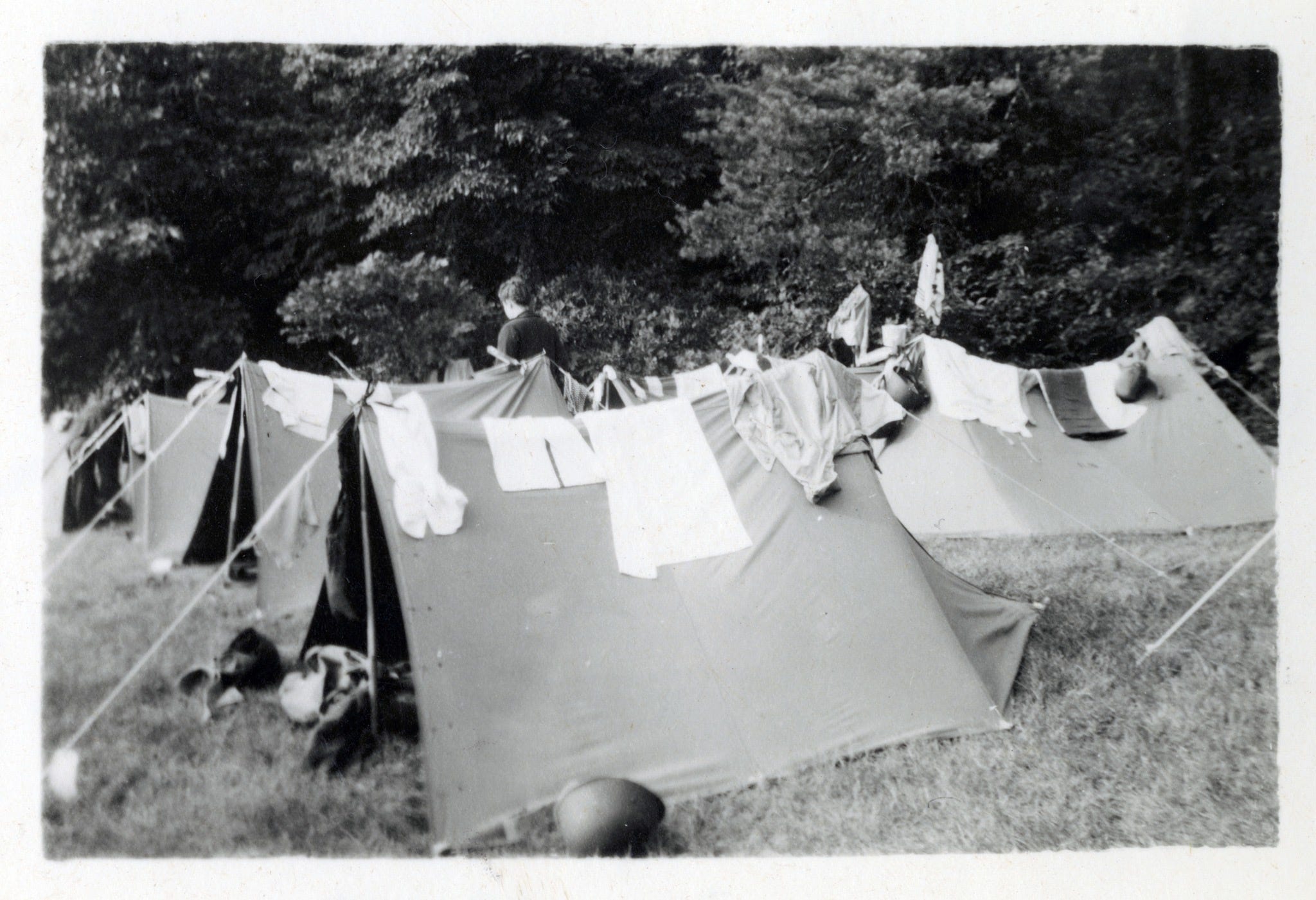
And interestingly, in all his stories, he was usually alone. No grand camaraderie. No “band of brothers” mythology. Just him, a broken vehicle, bad shoes, weather, a tent, and trying to get through another day.
Years later I asked his friend Roy what my dad had actually experienced over there. Roy filled in some blanks. People around them died. A lot. Neither Roy nor my dad seemed especially interested in being admired for what they had done. They just believed it had to be done and hoped their children would never have to do it again.
My dad avoided places like the American Legion for years. He never used the war to build an identity around himself. Never asked anyone to admire him for serving.
He never talked about glory or honor or sacrifice or victory. War, to him, seemed more like a hailstorm Midwest farmers survive because they have to, not because hailstorms are noble.
His silence about the war taught me more than any patriotic speech ever could.
I ended up being anti-war. (Which is not the same as anti-soldier.)
I’m not naive enough to think humanity will suddenly evolve beyond war because we write thoughtful Facebook posts and sing folk songs around campfires and create anti-war art. Civilization seems quite attached to it. But I still think something gets lost when war becomes performance.
My father’s generation came back quieter.
Maybe they understood something we keep forgetting: most wars are experienced not as history or politics but as weather, waiting, discomfort, fear, boredom, luck, and the hope of making it home.
 | A guest post by
|
This was beautiful. I never got to hear my relative’s stories, I wonder what they had to say. I hope it would have been calls for peace as powerful as this one.